01
A metropolitan issue, not a state series
The Dallas Goldback is a single-issue project centered on the Dallas–Fort Worth region. Goldback’s own account describes it as an early Texas project sponsored by Texas Precious Metals, not as a replacement for a future full Texas series. That distinction matters: this site covers one note, one denomination, and one regional composition.
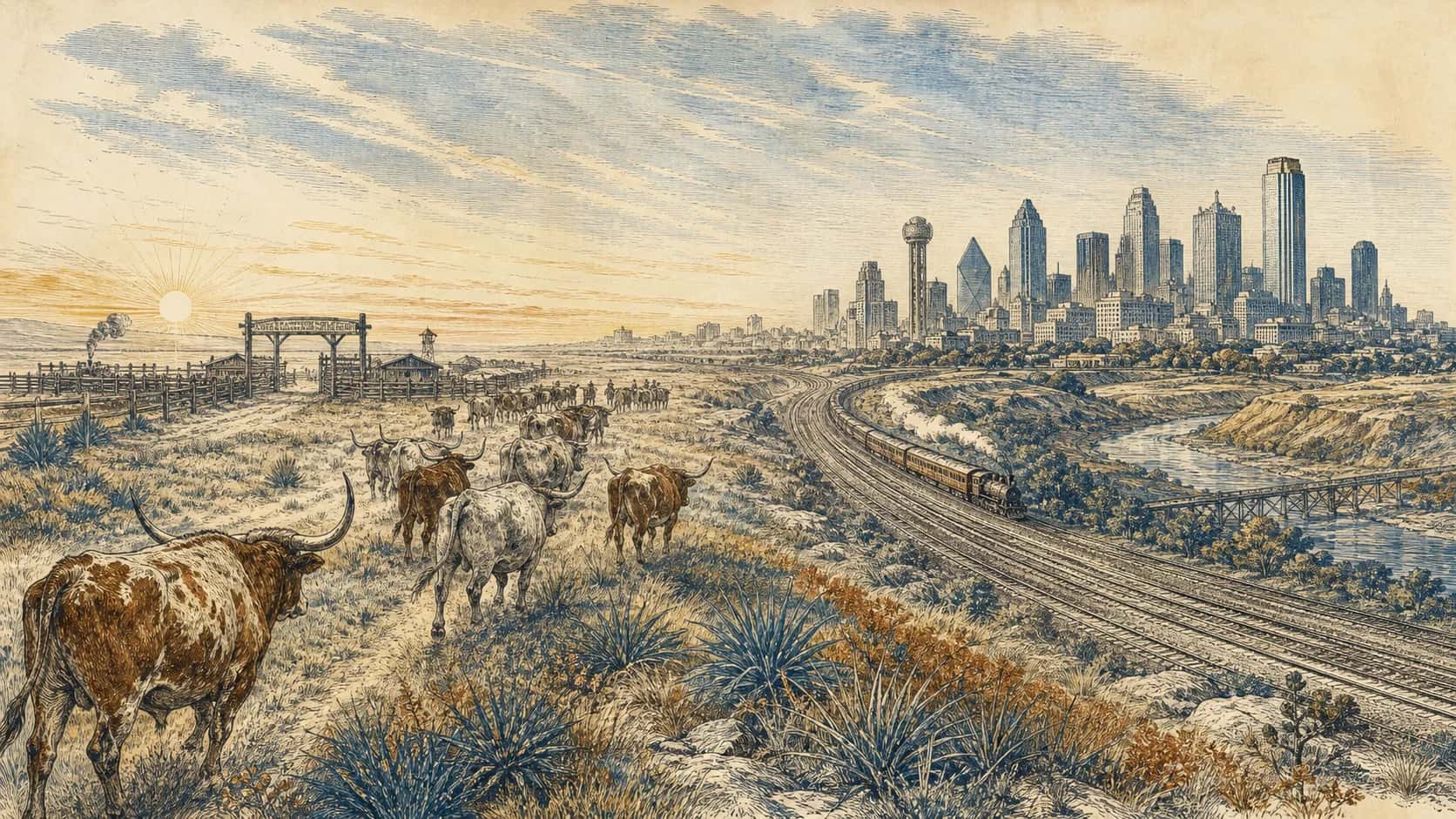
The title names Dallas and Fort Worth, and the artwork connects them. A modern skyline rises behind open ground, cattle, and working figures. Modern Dallas and Fort Worth’s ranching history share the same small scene.
02
The skyline shows modern Dallas
Reunion Tower makes the skyline instantly recognizable as Dallas. The surrounding towers turn the city’s modern architecture into a compact engraved silhouette. This is a specific Dallas skyline, not a generic city backdrop.
The small “Y’all Street” sign adds a current Dallas reference to the traditional engraved design. It keeps the note connected to present-day North Texas.
03
Cattle and stockyards carry Fort Worth’s history
Longhorn cattle and drovers move across the foreground. They point to the cattle-trade history associated with Fort Worth and the Stockyards, where rail access and livestock commerce helped shape the city. Placing them in front of the skyline keeps that history at the center of the picture.
No named virtue has been verified for this single issue in the supplied image or the official Goldback article. It is best treated as a regional design rather than given a virtue from another state series.
04
How to read the object carefully
Start with what can be confirmed directly: denomination, year, gold content, sponsor mark, skyline, cattle, drovers, and printed place names. Then separate what the note says from what the artwork may suggest. The skyline can suggest commerce and ambition, but those words are not printed on the note.
Keeping facts and interpretation separate makes the guide more useful. It also gives the artwork room to speak for itself.
Sources and further reading
Interpretive statements are identified in the text. Product facts are tied to the supplied front image or cited sources.